Pay in installments of $5.55 with
 ,
,
 and
and

Shipping Estimate
USA
- USA
- CAN
- USA
- CAN
Ships within 48 hours · Estimated delivery Jun 29 - Jul 4
 Promo Codes Available:
For Your Every Summer RSVP, with Code: SUMMER15
Description
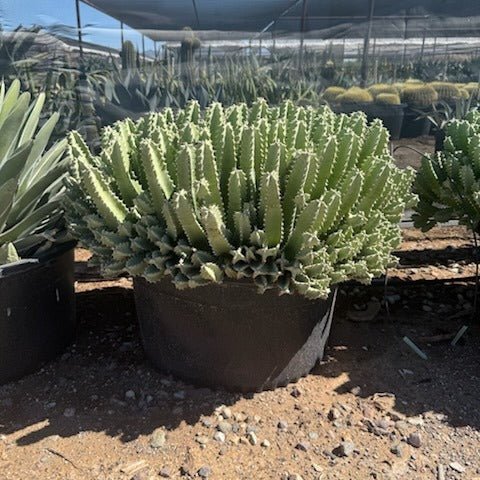
moroccan pot plant Buy Moroccan Mound Phoenix, AZ | Euphorbia resiniferaPhoenix's Toughest Mounding Succulent Moroccan Mound Euphorbia resinifera, known as the Moroccan Mound, is one of the hardiest and most maintenance free succulents you can plant in the Phoenix Valley. Native to the rocky hillsides of Morocco, this dense, cushion forming Euphorbia grows into neat, architectural mounds of four sided blue green stems studded with short spines. It's virtually indestructible in Arizona heat thriving in full sun, reflected
Phoenix's Toughest Mounding Succulent — Moroccan Mound
Euphorbia resinifera, known as the Moroccan Mound, is one of the hardiest and most maintenance-free succulents you can plant in the Phoenix Valley. Native to the rocky hillsides of Morocco, this dense, cushion-forming Euphorbia grows into neat, architectural mounds of four-sided blue-green stems studded with short spines. It's virtually indestructible in Arizona heat — thriving in full sun, reflected heat, rocky soil, and extreme drought with zero fuss. Whether you're filling a Scottsdale rock garden, anchoring a Mesa xeriscape bed, edging a Chandler walkway, or covering a Gilbert slope, Moroccan Mound delivers year-round structure on almost no water.
Moroccan Mound Plant Details
| Attribute | Detail |
|---|---|
| Scientific Name | Euphorbia resinifera |
| Common Names | Moroccan Mound, Resin Spurge |
| Mature Height | 12–18 inches (individual mound); clumps grow wider over time |
| Mature Width | 18–24 inches per mound; spreads to 3–4 feet as a clump |
| Growth Rate | Moderate — fills in steadily, forming dense mounds within 2–3 years |
| Sun | Full sun (6+ hrs). Handles reflected heat from walls and pavement. |
| Water | Very low once established. Extremely drought-tolerant. |
| USDA Zones | 9–11 (Phoenix is Zone 9b–10a) |
| Soil | Well-draining. Thrives in Arizona caliche soils with minimal amendment. |
| Foliage | Evergreen — blue-green four-sided columnar stems year-round |
| Bloom | Small yellow to orange flowers at stem tips in spring |
Moroccan Mound Uses in Phoenix Landscapes
Rock Garden & Xeriscape Ground Cover
Moroccan Mound's dense, cushion-like growth habit makes it an ideal ground cover for rock gardens and gravel beds. Plant in groups among decomposed granite and desert boulders for a naturalistic mounding effect. Over time, individual mounds merge into a continuous carpet of blue-green columns. Pairs beautifully with Agave, Aloe, and other Euphorbias for a layered desert garden.
Slope & Erosion Control
Moroccan Mound excels on slopes and hillsides where its spreading, mounding habit stabilizes soil while requiring almost no irrigation. Plant 18–24 inches apart on gentle to moderate slopes in Scottsdale, Paradise Valley, and Fountain Hills landscapes for a maintenance-free slope solution.
Border & Edging Plant
Line walkways, driveways, and patio edges with Moroccan Mound for a tidy, architectural border. The mounding form stays neat without pruning, and the short spines add subtle texture without being dangerous. Space 18–24 inches apart for a continuous low hedge effect in Tempe, Mesa, and Peoria landscapes.
Pool-Friendly & Low-Maintenance Beds
Moroccan Mound's compact growth, no leaf drop, and minimal water needs make it perfect near pools, courtyards, and HOA-maintained areas. It stays tidy year-round with virtually zero maintenance — no pruning, no deadheading, no pest issues.
Best Time to Plant Moroccan Mound in Phoenix
Fall (October–November) is the ideal planting window. Warm soil encourages root establishment while cooler air reduces transplant stress. Spring (February–April) is the second-best option. Moroccan Mound can actually be planted year-round in Phoenix — it's one of the few succulents tough enough to transplant even in summer with modest extra watering.
How to Plant Moroccan Mound
- Dig wide, not deep — hole should be 2–3x the root ball width, same depth
- Check for caliche — break through any hardpan layer to ensure drainage
- Backfill with native soil — Moroccan Mound tolerates poor soil; minimal amendment needed
- Spacing — 18–24 inches apart for ground cover; 24–30 inches for individual mounds
- Water basin — build a shallow 2-inch ring around the plant for the first few months
- Mulch — 1–2 inches of gravel mulch; avoid organic mulch which retains too much moisture
Watering Moroccan Mound in Phoenix
First Year Watering Schedule
Weeks 1–2: Every 3–4 days, deep and slow. Month 1–2: Every 5–7 days. Month 3–6: Every 10–14 days (every 7–10 days in peak summer). After Year 1: Every 14–21 days in summer; monthly or less in winter.
Drip Irrigation
Place one 0.5–1 GPH emitter 8–12 inches from the mound center. Moroccan Mound is extremely rot-resistant compared to many succulents but still prefers to dry out between waterings. Established plants can survive on rainfall alone in most years.
How fast does Moroccan Mound grow in Phoenix?
Moroccan Mound grows at a moderate pace, forming a dense 18–24 inch mound within 2–3 years. It continues to spread slowly outward over time, with mature clumps reaching 3–4 feet wide.
Is Moroccan Mound drought-tolerant once established?
Extremely — it's one of the most drought-tolerant succulents available. Established plants can survive on rainfall alone in Phoenix and go months without supplemental irrigation.
Is Moroccan Mound toxic?
Yes — like all Euphorbias, it produces a milky white latex sap that can severely irritate skin and eyes. Wear gloves and eye protection when handling or pruning. The sap of Euphorbia resinifera contains resiniferatoxin, one of the most potent irritants in the plant kingdom.
Can Moroccan Mound handle full Phoenix summer sun?
Absolutely — it's built for intense heat and sun. It handles reflected heat from walls, driveways, and pool decks without any sunburn or stress.
Does Moroccan Mound spread aggressively?
No. It spreads slowly and predictably by offsetting from the base. It's easy to contain and won't take over your garden. Simply remove any unwanted offsets if it grows beyond its allotted space.
You May Also Like
Gopher Plant — Another tough Euphorbia with blue-green foliage for a complementary mounding accent.
Firestick Euphorbia — Bright coral-red stick succulent for dramatic color contrast.
Blue Elf Aloe — Compact blue-green aloe rosettes that pair well with Moroccan Mound's columnar texture.
Ghost Aloe — Pale blue-white aloe for cool-toned contrast in desert beds.
Dragon Toes Agave — Small textured agave for a complementary accent alongside mounding Euphorbias.
How Many Moroccan Mound Do I Need?
Moroccan Mound spreads into broad cushions (18 to 24 inches per mound, merging to 3 to 4 feet over time), so for a rock garden carpet or slope cover space plants about 2 feet on center and let them knit together. Use the coverage table below to estimate counts, then round up for full slopes.
| Area to cover | Spacing | Plants needed |
|---|---|---|
| 50 sq ft | 2 ft o.c. | 13 |
| 100 sq ft | 2 ft o.c. | 25 |
| 200 sq ft | 2 ft o.c. | 50 |
For single architectural mounds or a tidy border, space 24 to 30 inches apart instead so each cushion keeps its clean dome shape.
Moroccan Mound Season-by-Season in Phoenix
- Spring (Feb–Apr): Small yellow to orange flowers ring the stem tips and growth picks up. A strong second planting window as soil warms.
- Summer (May–Sep): Built for it. Shrugs off full sun and reflected heat from walls and pool decks with no sunburn, and rides out the monsoon without rot thanks to its loose, gritty-soil preference. Among the few succulents tough enough to plant even mid-summer with a little extra water.
- Fall (Oct–Nov): The ideal planting season: warm soil plus mild air give the fastest establishment.
- Winter (Dec–Jan): Holds its blue-green structure year-round. It is hardier than most Euphorbias but still best protected when nights dip below about 25°F; keep it dry through cold, wet spells.
At a Glance
✔ Heat-Loving (Reflected-Heat Tolerant) ✔ Drought-Tolerant ✔ Evergreen ✔ Pool-Friendly (Low-Litter) ✔ Low-Maintenance ✔ Deer & Rabbit-Resistant
Plant It With
- Gopher Plant: another tough blue-green Euphorbia that echoes the mounding texture.
- Firestick Euphorbia: coral-red stick form for dramatic color against the blue mounds.
- Candelilla: slim wax-stem Euphorbia that adds vertical contrast in the same bed.
- Desert Spoon: silver spherical accent that rises above the low cushions.
Is Moroccan Mound Right for Your Yard?
Moroccan Mound is one of the most foolproof choices for full-sun Phoenix yards: it wants 6-plus hours of sun, drains happily in caliche with little amendment, and asks for almost no water once rooted, making it ideal for rock gardens, slopes, and low borders. Not a fit if your spot is shaded or stays soggy. Note the sap contains resiniferatoxin, an extremely potent skin and eye irritant, so always wear gloves and eye protection and keep it away from high-traffic, kid, and pet zones.
Shipping Notes
- Free Standard Shipping on $100+ Orders to the USA.
- Except Preorder products are shipped in 48 hours.
- Delivery to the USA:
- Standard Shipping : 3-10 business days
- If time is of the essence, please consider selecting expedited delivery for faster service.
Exchange/Return Notes
- We offer a 30-day return/exchange service after receiving.
- Final sale items are not eligible for returns or exchanges.
- To process your return/exchange, please contact us at [email protected]
- Please click here for more details>>> Return & Exchange Policy